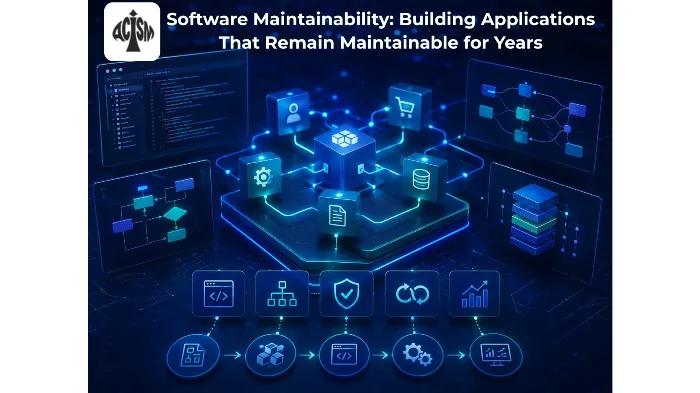
Software Maintainability Practices help organizations build maintainable, scalable, and future-ready applications while reducing technical debt and developer dependency.
Software Maintainability Practices help organizations build maintainable, scalable, and future-ready applications while reducing technical debt and developer dependency.
Modern businesses rely heavily on software to support operations, customer engagement, and growth. However, building software is only the beginning. The real challenge lies in ensuring that applications remain manageable, adaptable, and maintainable as business requirements evolve.
This is where Software Maintainability Practices become essential.
Software Maintainability Practices focus on creating applications that continue delivering value over the long term while minimizing maintenance challenges, technical debt, and operational complexity. Rather than concentrating solely on short-term functionality, these practices emphasize maintainability, transparency, and future readiness.
Many organizations invest heavily in software projects only to encounter maintenance difficulties a few years later. Enhancements become slower to implement, documentation becomes outdated, and new developers struggle to understand existing systems.
This challenge has become even more visible in the AI era. Many organizations rapidly create applications using AI-assisted development tools and prompts, often prioritizing speed over maintainability. While these applications may deliver quick results, insufficient attention to architecture, documentation, and lifecycle planning can create significant maintenance challenges over time.
As software evolves, complexity increases, dependencies multiply, and technical debt accumulates. Implementing Software Maintainability Practices from the beginning helps organizations avoid these long-term challenges and maintain greater control over their software assets.
One of the biggest obstacles to software sustainability is developer dependency.
In many organizations, the original developers possess most of the knowledge about how an application works. When those individuals leave, valuable expertise often leaves with them.
As a result, maintenance becomes slower and more expensive. Development teams spend significant time understanding existing systems before implementing even minor enhancements.
Strong Software Maintainability Practices reduce developer dependency by promoting transparency, clear architecture, and maintainable design patterns that make applications easier to understand regardless of who originally built them.
Technical debt accumulates when software evolves without sufficient attention to maintainability. Over time, applications become increasingly difficult to modify, test, and enhance.
Software Maintainability Practices help address this challenge by emphasizing modular design, clear component boundaries, and architectural consistency.
When software is organized into manageable components, teams can implement updates more efficiently while reducing the risk of introducing unintended side effects elsewhere in the system. This approach allows organizations to maintain agility while controlling long-term maintenance costs.
| Software Challenge | Long-Term Impact | Sustainable Solution |
|---|---|---|
| Developer Dependency | Knowledge loss when employees leave | Transparent architecture |
| Technical Debt | Higher maintenance costs | Modular development |
| Complex Integrations | Difficult updates and enhancements | Automated integration management |
| Poor Documentation | Slower onboarding | Visual process mapping |
| Legacy Systems | Reduced adaptability | Continuous modernization |
Acism specializes in implementing Xsemble-based solutions to help organizations strengthen their Software Maintainability Practices and address long-term maintenance challenges.
Rather than requiring developers to manually manage complex integration logic, Xsemble allows teams to focus on creating functional components. The framework automatically generates the connecting code required to integrate those components during the build process.
Because integration logic is generated automatically, outdated connecting code does not accumulate over time. This approach reduces technical debt and improves long-term maintainability.
The result is a cleaner and more transparent software architecture that remains easier to manage as business requirements evolve.
A major challenge in traditional software systems is understanding how information flows through the application.
X-Flowcharts provide a visual representation of both control flow and data flow, making software behavior easier to understand.
Instead of spending weeks analyzing source code, developers can quickly identify the components involved in a specific business process. This visibility supports effective Software Maintainability Practices by improving collaboration, accelerating onboarding, and simplifying future enhancements.
Software sustainability extends beyond architecture. It must also be embedded within the development lifecycle itself.
Acism's X-SDLC methodology promotes modular design, transparency, maintainability, and future readiness throughout every stage of software development.
By integrating Software Maintainability Practices into planning, design, implementation, and maintenance activities, organizations can create applications that remain adaptable as technologies and business requirements change.
This approach ensures that sustainability becomes an ongoing process rather than an afterthought.
Organizations increasingly recognize that software must do more than function correctly today. It must remain scalable, understandable, and maintainable for years.
Adopting Software Maintainability Practices enables businesses to reduce technical debt, improve software transparency, accelerate onboarding, and simplify future modernization efforts. These benefits contribute directly to operational efficiency and long-term business value.
Organizations increasingly recognize that software must do more than function correctly today. It must remain maintainable, scalable, and adaptable for years.
By combining Xsemble, X-Flowcharts, and X-SDLC methodologies, Acism helps organizations reduce technical debt, improve software transparency, and simplify future modernization efforts. This focus on long-term maintainability enables businesses to maximize the value of their software investments while remaining prepared for changing business requirements.
Software Sustainability is about building applications that continue delivering value long after their initial deployment. By reducing technical debt, minimizing developer dependency, and prioritizing maintainability, organizations can extend the lifespan of their software investments.
Approaches such as modular architecture, visual system transparency, and lifecycle-focused development methodologies help businesses create software that remains adaptable, understandable, and easier to maintain over time. As digital transformation continues to accelerate, Software Maintainability Practices will become a critical factor in long-term business success.
1. What are Software Maintainability Practices?
Software Maintainability Practices are development approaches that help applications remain maintainable, adaptable, transparent, and valuable throughout their lifecycle.
2. What causes technical debt?
Technical debt often results from rushed development, poor documentation, inconsistent architecture, and short-term design decisions.
3. Why is developer dependency a risk?
When knowledge is concentrated among a few developers, maintenance becomes difficult if those individuals leave the organization.
4. How does Xsemble improve maintainability?
Xsemble supports component-based development and automatically generates integration code, reducing complexity and technical debt.
5. What role does X-SDLC play in software sustainability?
X-SDLC incorporates maintainability, transparency, future readiness, and Software Maintainability Practices throughout the software development lifecycle.